Non Digital Multimeter Explained: A UK Buyer's Guide
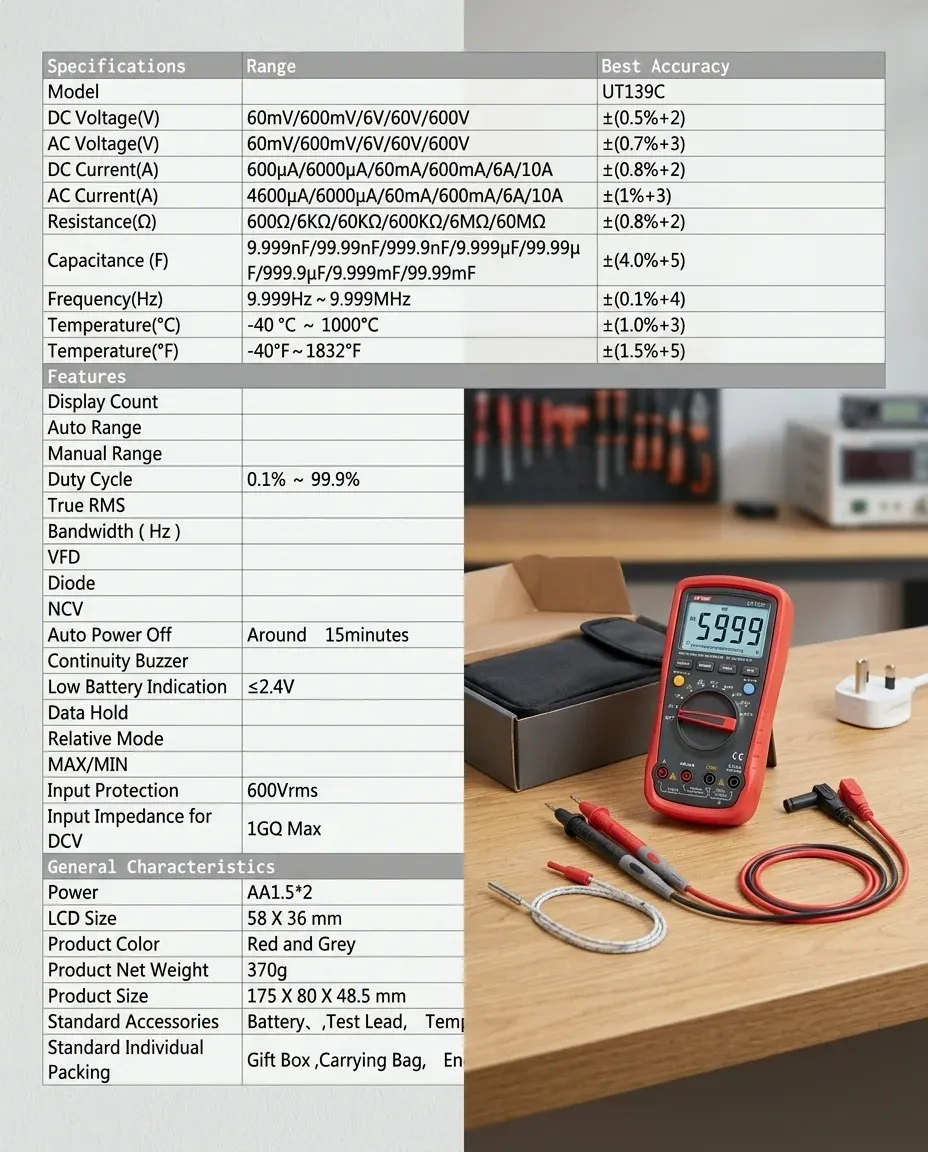
A non digital multimeter is an analogue multimeter that measures voltage, current and resistance using a moving needle instead of a digital screen. It can still be useful for viewing changing trends at a glance, but for most modern UK electrical, HVAC and maintenance work, a properly rated digital multimeter is usually the safer and more practical choice.
TL;DR: A non digital multimeter, also called an analogue or needle multimeter, can be handy for spotting rising or falling readings. However, it is typically less precise, harder to read accurately and often less suitable for modern mains fault-finding than a CAT-rated digital meter. Based on our testing of everyday fault-finding tools used across UK trade settings, analogue meters are best kept for training, simple bench work or specialist use rather than as an all-round primary meter.
Although analogue meters still have a place in some toolkits, choosing one in the UK today needs more thought than it did years ago. Safety standards, CAT ratings, true RMS requirements and the realities of electrical testing all affect whether a non digital multimeter is appropriate. At Voltcap, our focus is dependable test equipment for electricians, HVAC engineers and maintenance professionals, so this guide explains where analogue meters still make sense and where a modern digital model is the better option.
Key takeaways
- A non digital multimeter is an analogue meter with a pointer and printed scale instead of an LCD display.
- It can be useful for spotting fluctuations and trends quickly.
- However, it is usually less precise than a modern digital multimeter.
- For UK mains work, CAT rating, probe quality and overall safety matter more than nostalgia or low price.
- In most cases, a true RMS digital multimeter is the better all-round choice for modern fault-finding.
What is a non digital multimeter?
A non digital multimeter is an analogue electrical test meter. Instead of showing numbers on a display, it uses a needle that moves across a marked scale to indicate voltage, current or resistance. In the UK, older electricians often trained with these instruments before digital models became standard.
The basic principle is mechanical movement. As current passes through the internal movement, the needle deflects across the dial. The user selects the correct range manually and then reads the result from the matching scale. As a result, analogue meters can feel intuitive for trend-watching, although they require more care to read correctly.
You may also hear them called analogue multimeters, pointer meters or needle multimeters. In practice, these terms usually mean the same thing when someone searches for a non digital multimeter.
How does a non digital multimeter work?
Inside most analogue meters is a moving-coil mechanism. When electrical current flows through that coil, it interacts with a magnetic field and causes the pointer to move across the dial. The amount of movement represents the measured value.
To use one properly, you choose the function and range before testing. For example, if you expect around 230V AC mains in the UK, you would select an AC voltage range above that level. Likewise, if you are measuring resistance in the low hundreds of ohms, you would choose an ohms range that gives usable scale resolution.
Why does manual ranging matter?
Most non digital multimeters are manual-range only. That means you must decide whether to use 10V, 50V, 250V or another scale before taking a reading. Experienced users can do this quickly; however, poor range selection can reduce readability or even damage lower-quality instruments.
If you want to compare this with newer instruments, our guide to multimeters with auto ranging in the UK explains how digital models simplify measurement while improving everyday usability.
Why would someone still use a non digital multimeter?
There are still valid reasons why some buyers in Britain look for an analogue meter. Even so, those advantages tend to be quite specific rather than universal.
Is an analogue meter better for seeing changing readings?
Yes, sometimes. A moving pointer can make rising or falling values easier to interpret at a glance. If voltage is drifting up or down slowly, the needle movement often shows that trend more naturally than changing digits on a screen.
Do non digital multimeters have simpler operation?
Often they do. Analogue meters typically have straightforward controls without menus or advanced functions. Because of that simplicity, some users like them for occasional workshop checks or teaching basic principles.
Are they useful for education and training?
Yes. In training environments, analogue meters can help learners understand polarity, scale reading and circuit behaviour visually. Therefore, colleges and hobby workshops may still keep one available for demonstration purposes.
What are the disadvantages of a non digital multimeter?
This is where realistic buying advice matters most. For many present-day tasks carried out by electricians, maintenance teams and HVAC engineers in the UK, analogue meters are no longer the best fit.
Are non digital multimeters less accurate?
Usually yes. A digital meter normally offers clearer numerical resolution and better accuracy for routine diagnostics. By contrast, reading an analogue scale introduces human error through parallax and interpretation. As a result, two users may read slightly different values from the same dial position.
Can they be harder to use on low-voltage electronics?
Yes. If you work on control boards, sensors or battery-powered devices, small differences matter. Digital instruments are generally much better for measuring exact DC values such as 5V reference supplies or millivolt signals.
Do analogue meters affect sensitive circuits?
They can do. Many older analogue meters have lower input impedance than modern digital models. Consequently, they may load sensitive circuits and alter the measurement itself. For electronics work, that is a significant drawback.
Are older analogue meters safe enough for UK mains work?
Not always. This point matters greatly in the UK market. An old or cheaply made non digital multimeter may lack clear CAT ratings or robust protection features expected around mains distribution equipment. According to current UK best practice for safe electrical testing at work environments, instrument condition and correct category rating should never be treated as optional extras.
Non digital multimeter vs digital multimeter: which is better?
The answer depends on application; however, for most people buying today in the UK, a modern digital model will be more suitable overall.
Where can an analogue meter still be useful?
- Watching gradual fluctuations
- Basic educational demonstrations
- Simple bench testing where precision is not critical
- Niche workshop tasks by experienced users who are comfortable reading scales
When is a digital multimeter usually the better choice?
- Mains electrical fault-finding
- HVAC servicing and diagnostics
- Sensitive electronics testing
- Work requiring clearer accuracy and faster interpretation